

Municipal Heritage Property Program
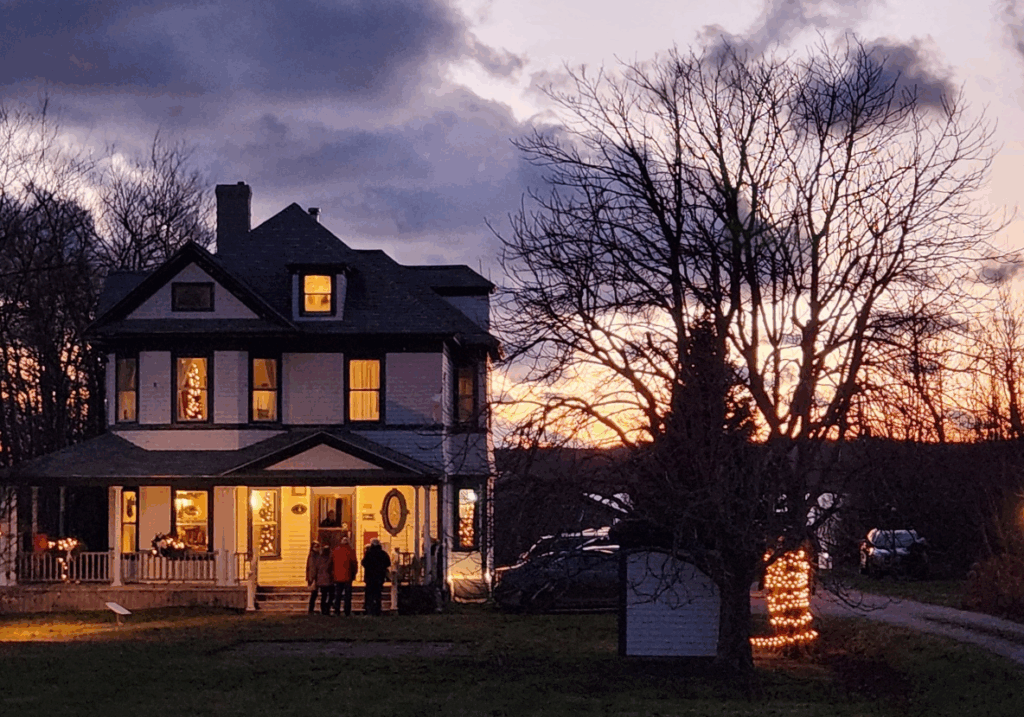 Image of Haus Treuburg, registered heritage property.
Sign up to receive heritage property program updates
About the Program
The Municipality of Inverness County’s Heritage Property Program helps protect buildings, streetscapes, and landscapes that represent the cultural identities of our communities.
Property owners play a vital role in preserving our built heritage through this program, with the support of the municipality’s Council, staff, and the Heritage Advisory Committee.
What Is a Registered Municipal Heritage Property?
A building, streetscape, or landscape approved by Council for registration due to its heritage value resulting in heritage property registration being attached to the title of the property, which transfers from owner to owner.
Registration is not limited to grand or iconic buildings. Modest homes, farms, and other properties can be registered for their:
- Exterior architectural style or craftsmanship or construction methods
- Age or period of construction or use
- Connection to a notable local individual, group, or event
- Role within a larger historic streetscape, community, or cultural landscape
How are heritage properties protected?
Owners of Heritage Properties submit applications to Council for approval to
- Demolish a registered heritage property,
- Complete renovations that alter or affect the specific physical features, called character-defining elements.
What other benefits are there for registering a heritage property?
1. Recognition & Promotion
Information about registered heritage properties is shared with the public and may also be promoted by the municipality and local historical societies.
2. Long-Term Stewardship
Registration helps ensure the property’s unique heritage features are respected and preserved for future generations.
3. Conservation Support
The Municipality can provide heritage property owners with external resources and support conserving their property.
4. Financial Support
Most municipally registered heritage properties are eligible to apply for some funding to help them maintain their heritage property.
How to apply to Register a Heritage Property
1. Identify Heritage Value
Consider what makes your property historically, culturally, or architecturally significant. Think about its age, design, role in the community, or connections to important people or events. This helps prepare you to explain its heritage value in the application.
2. Review Requirements
Before applying, review this website and speak with the Culture and Heritage Development Coordinator, as well as becoming familiar with:
- the Municipality’s Heritage Property Bylaw #33
- the provincial Heritage Property Act, with section 12 onward for municipal heritage property information
3. Submit an Application
Complete the Heritage Property Registration Application Form.
4. Municipal Review & Decision
Once your completed application is submitted to the Municipality:
- Application is reviewed at a public Heritage Advisory Committee meeting, and the committee makes a recommendation to council.
- Council reviews and votes on the recommendation.
- Property owners are notified of Council’s decision.
How to apply to Substantially Alter Your Heritage Property
When planning changes to the exterior of your registered heritage property:
1. Identify the Character-Defining Elements for your property
Contact the Culture and Heritage Development Coordinator if you do not have a list of exterior character-defining elements for your registered heritage property.
2. Determine if Your Project Is a Substantial Alteration
Do your plans potentially affect or alter any of your property’s exterior character-defining elements?
- Yes: submit an application (see Step 3 below).
- No: complete your non-substantial alterations as planned. If plans change, determine if the new alterations will affect or alter character-defining elements
- Not sure: contact the Culture and Heritage Development Coordinator.
3. Submit a Substantial Alteration Application
If you plan to alter or affect any of the exterior character-defining elements, submit a Heritage Property Substantial Alteration Application for Council approval.
4. Municipal Review & Decision
Once your application is submitted to the Culture and Heritage Development Coordinator:
- Application is reviewed at a public Heritage Advisory Committee meeting.
- Council reviews the Committee’s recommendation and votes on your application.
- Property owners are notified of Council’s decision.
Please note: Substantial alterations that occur before receiving Council approval may result in penalties under the Heritage Property Act and municipal bylaws. Approved substantial alterations may also require additional permits from Eastern District Planning Commission.
Frequently Asked Questions
What is heritage value?
According to the provincial Heritage Property Act, “heritage value means the aesthetic, historic, scientific, cultural, social or spiritual importance or significance for past, present or future generations and embodied in character-defining materials, forms, locations, spatial configurations, uses and cultural associations or meanings.” A property with heritage value helps tell the story of how people lived, worked, built, or gathered in a particular time and place in the municipality.
What are Character-Defining Elements?
The provincial Heritage Property Act defines character-defining elements as the materials, forms, location, spatial configurations, uses and cultural associations or meanings that contribute to heritage value. These are the physical features on the building’s exterior chosen at the time of registration as the reason the property is considered a heritage property. To alter character-defining elements, the property owner must seek Council approval. Property owners may contact the Culture and Heritage Development Coordinator to review a registered property’s character-defining elements.
What are substantial alterations?
A substantial alteration is defined by the Heritage Property Act as any action that affects or alters the character-defining elements of a property, such as replacing a character-defining element of wood shingle siding with vinyl siding. Property owners must submit a Substantial Alteration Application for Council approval to ensure the property’s heritage value is respected. For questions regarding substantial alterations, contact the Culture and Heritage Development Coordinator before starting any work. A substantial alteration application does not replace any permits required by Eastern District Planning Commission.
What are non-substantial alterations?
Non-substantial alterations generally don’t affect or alter character-defining elements. Alterations where the material, style, and location of the character-defining elements stay the same are usually considered non-substantial, such as:
- painting your building’s character-defining wood shingles,
- replacing roof shingles and siding shingles with the exact same style and material that are currently in place,
- minor repairs to the wood window frames to remove any rot, replace or wood fill pieces of the frame to restore the windows to the original style and material,
- repairing decorative architectural detailing on a front porch with wood filler and paint or replacing broken or missing wooden details with new pieces that are the exact same material and style.
Do interior alterations require Council approval?
Generally, no. Alterations to the interior of your home are usually non-substantial, unless they affect or alter an exterior character-defining element, such as installing heat pumps in a way that alters or affects a wood decorative trim that was identified as a character-defining element. This may result in a recommendation for property owners to place the heat pumps in a different location that does not affect the wood trim.
Do building code or accessibility related upgrades require Council approval?
Substantial alterations that are required to meet building codes or increase accessibility to your building do take priority over the Heritage Property Act requirements but still require Council approval if they affect or alter any exterior character-defining elements.
Does heritage property registration affect my property insurance?
Heritage Property registration may impact the property’s insurance. Consult your insurance provider before applying to register your property.
Can I update my heritage property with modern materials?
Renovations with modern materials that respect the style and heritage value of character-defining elements can be approved by Council by submitting an application for substantial alterations.
Does registration affect what I can do with my heritage property?
Only the specific exterior features identified as character-defining elements are protected by the Heritage Property Act. You can still live in, sell, renovate, and maintain your property—within the guidelines that aim to preserve those character-defining elements. You and all future property owners will need to apply for Municipal Council approval to demolish or complete substantial alterations to any exterior character-defining elements.
Is funding available to help me maintain my heritage property building?
Heritage Property owners can apply for financial support from:
- Heritage Trust of Nova Scotia – Buildings at Risk Fund for up to $3,000 for 50% of repairs
- Government of Nova Scotia Heritage Development Fund with two streams:
- Conservation Advice Grant: Up to $5,000 for 50% of expenses to hire professionals for advice on how to conserve the property or 100+ year old cemetery monuments
- Conservation Work Grant:
- Up to $7,500 for 50% of conservation work on municipal heritage properties owned by non-profits or used as a place of worship
- Up to $10,000 for 50% of conservation work on provincial heritage properties
- Provincial Sales Tax Rebate on the provincial portion of HST for eligible materials used to repair the exterior of a heritage property.
What if I disagree with a Council decision about my heritage property?
If a property owner is not happy with a decision made by Council or the Minister under the Heritage Property Act, the avenue for them would be judicial review. They would apply to the Supreme Court for a review of the decision.
Can I apply to de-register or demolish my heritage property?
Yes, you can submit an application requesting to de-register or demolish your heritage property to the Culture and Heritage Development Coordinator. The Heritage Advisory Committee will review your application at a public meeting and make a recommendation to Council. An additional public hearing is required for Council to receive feedback from the community on your property’s heritage value before they vote to approve or reject your application.
Can I apply to register my property if the property’s original features have been altered?
Yes. Past changes don’t automatically disqualify a property. What matters is whether it still retains enough heritage value to be considered significant.
Is there a registration fee to apply to register my building?
No, the municipality does not charge a registration fee for applying to register a heritage property.
Do I need to hire a heritage expert or architect to apply to register my property?
No. Municipal staff can help guide you through the process. Clear photos and a strong description of the property’s history are usually enough. The Heritage Advisory Committee and staff can conduct site visits and complete more research if needed.
What makes a strong application to register my property?
A strong application that clearly demonstrates the property’s heritage value typically includes:
- A clear description of the property’s historical or cultural significance
- Photographs showing exterior architectural features
- The age, original use, notable owners, or community role of the property
- Sources for as much of the information as possible
How long does the application review process take?
Usually between 2–6 months, depending on the timing of Committee and Council meetings. The Heritage Advisory Committee will often review your application at its next quarterly meeting to make a recommendation to Council. Recommendations to Council are then typically brought to the next Committee of the Whole meeting for review by Council and then a vote can occur two weeks later at the next Regular Meeting of Council.
What if my property is registered as a Provincial Heritage Property?
If your property is registered as a Provincial Heritage Property, meaning it has heritage value that is significant to the province rather than just the municipality, you will need to submit applications for substantial alterations, demolition, and de-registration to the province as well.
Contact the provincial heritage property program if you have any questions:
Email: heritageproperty@novascotia.ca
Phone: 902-229-1292
Heritage Advisory Committee
The Municipality has a Heritage Advisory Committee that reviews all applications related to heritage properties and provides recommendations to Council.
Committee Terms of Reference
Municipal Heritage Property Bylaw
Committee Members
Lynn Chisholm, Deputy Warden, Councillor, District 5 of Port Hood/Mabou
Blair Phillips, Councillor, District 2 of Margaree/St. Joseph
Conrad Taves, St. Joseph du Moine
David Greenwell, Mabou
Elvi Kargoll, Port Hood
Cathy Gillies, Port Hood
Heritage Property Program Contact
Lyne Allain
Cultural & Heritage Development Coordinator
ccd@invernesscounty.ca
902-258-7145
Municipality of Inverness County
PO Box 179
Port Hood, NS B0E 2W0
Helpful Resources
Nova Scotia Heritage Property Act: Sections relevant to municipalities begins with at #12.
Heritage Trust of Nova Scotia: The Heritage Trust is a non-profit organization that supports the preservation of heritage properties in Nova Scotia and provides a wealth of resources to heritage property owners.
National Trust for Canada: The National Trust for Canada provides advocacy, funding tools, and best practices for heritage conservation.
The Standards and Guidelines for the Conservation of Historic Places in Canada: Offers results-oriented guidance for sound decision-making when planning for, intervening on and using historic places. Useful to anyone with an interest in conserving Canada’s historic places.