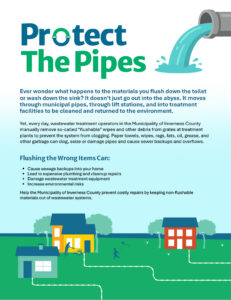
Protect The Pipes
Ever wonder what happens to the materials you flush down the toilet or wash down the sink? It doesn’t just go out into the abyss. It moves through municipal pipes, through lift stations, and into treatment facilities to be cleaned and returned to the environment.
Yet, every day, wastewater treatment operators in the Municipality of Inverness County manually remove so-called “flushable” wipes and other debris from grates at treatment plants to prevent the system from clogging. Paper towels, wipes, and other garbage can clog, seize or damage pipes and cause sewer backups and overflows.
Flushing the Wrong Items Can:
- Cause sewage backups into your home
- Lead to expensive plumbing and cleanup repairs
- Damage wastewater treatment equipment
- Increase environmental risks
Help the Municipality of Inverness County prevent costly repairs by keeping non-flushable materials out of wastewater systems.
Public Works Quicklinks
What NOT to Flush:
- Wipes (even those labeled “flushable”)
- Dental floss
- Paper towels
- Diapers
- Condoms
- Feminine hygiene products
- Cotton swabs (Q-tips)
- Hair
- Clothing
- Rags
- Fats, oils, and grease (FOG)
- Medications (Flushing medications can allow harmful substances to enter the wastewater system and potentially surrounding environment).
What NOT to Pour Down the Drain:
- Fats
- Oils
- Grease
Pouring fats, oils, and grease (commonly known as FOG) down the drain can also create serious problems. When grease cools, it hardens inside pipes, creating blockages that can cause sewer backups, flooding, costly repairs, and environmental damage. Learn more here:
Fats, Oils & Grease (FOG) | Municipality of the County of Inverness
Help Protect Our Community
By disposing of waste properly and keeping non-flushable items, medications, fats, oils, and grease out of the wastewater system, you help protect municipal infrastructure, reduce maintenance costs, and keep our waterways clean.